Every job below is one we do ourselves across South Bend.
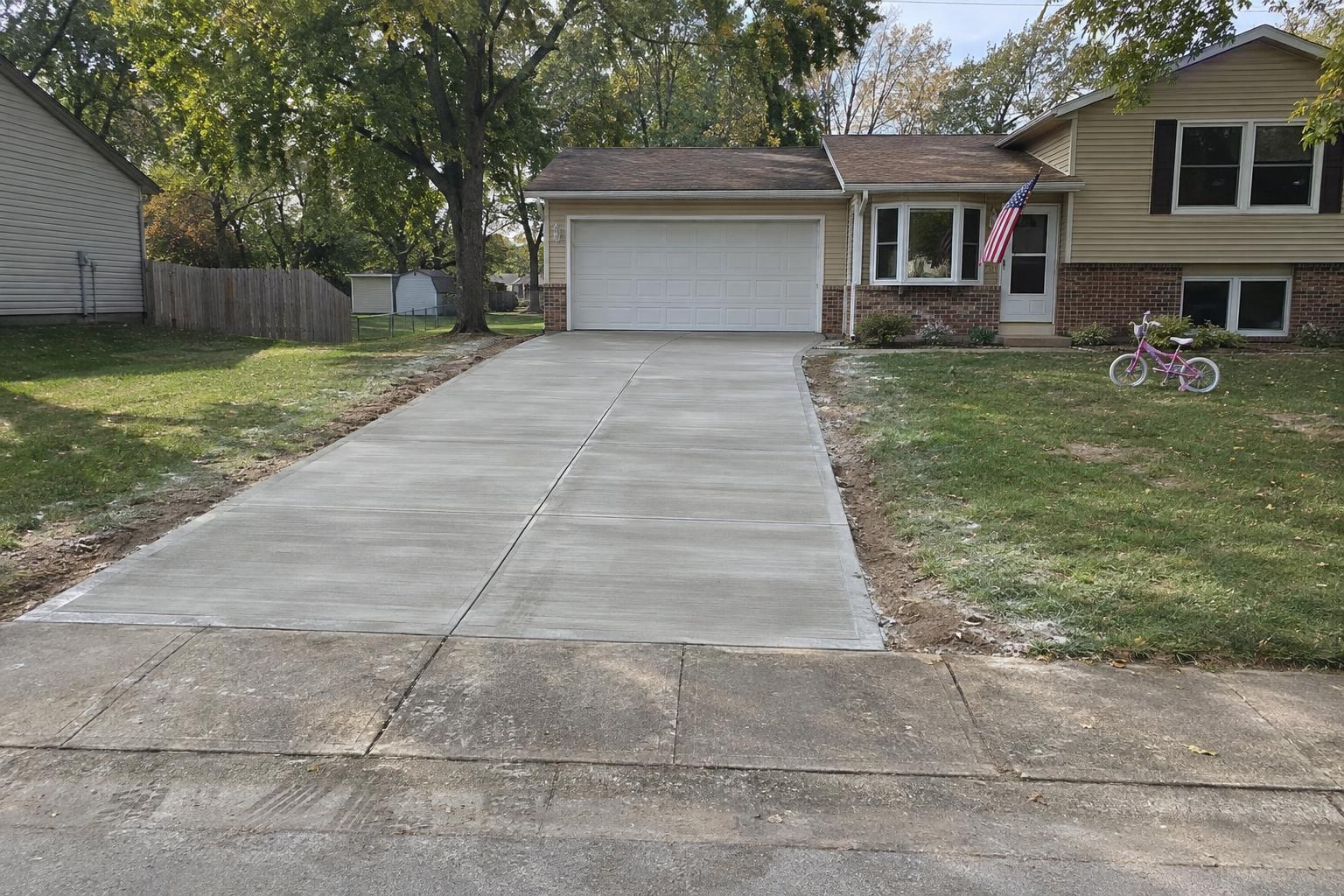
We run a minimum 4-inch slab over compacted gravel base, with a vapor barrier where the soil holds water. Rebar grid instead of wire mesh goes in on anything carrying a truck or RV. We saw-cut control joints the same day we finish the pour, so the slab cracks where we tell it to instead of wherever it wants.
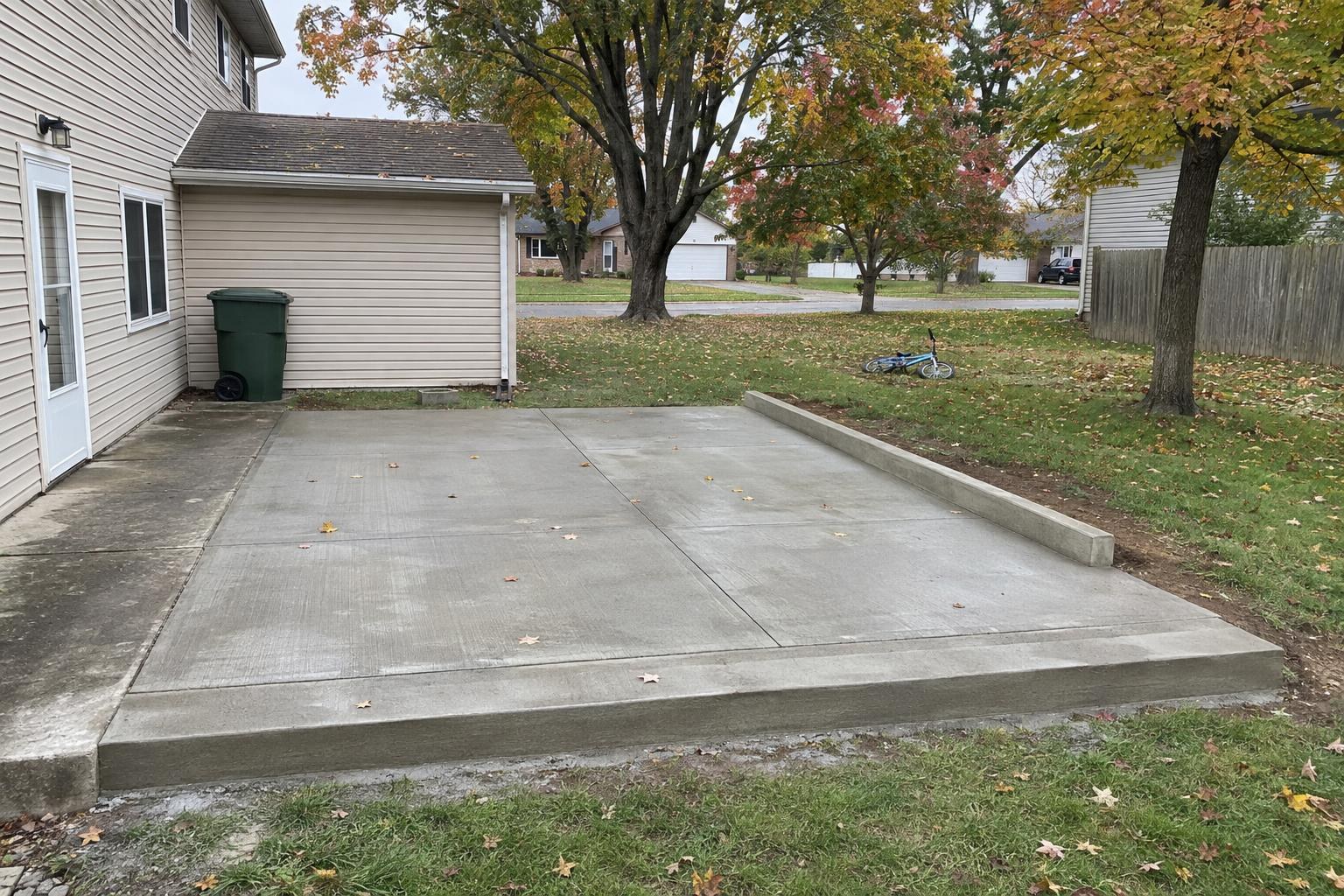
Patios get a broom finish for grip or a stamped pattern if you want it to look like flagstone or brick. We slope every pour away from the house so water doesn't pool against your foundation. Air-entrained mix is standard here, it's what keeps a patio from scaling after its first Michiana winter.
Stamped concrete gets color hardener broadcast into the surface before we press the pattern, then a release agent so the stamps lift clean. Cobblestone and ashlar slate are the patterns we get asked for most around here. Sealing it every two to three years keeps the color from fading and keeps salt out of the surface.
Spalling, pop-outs, and hairline cracks usually mean the top layer took on water and then froze. We grind out the damaged section, pin new concrete to the old with epoxy or rebar dowels, and feather the edge so the patch doesn't stand out six months later. A slab that's heaved or settled more than an inch is usually past patching, that calls for mudjacking or replacement instead.
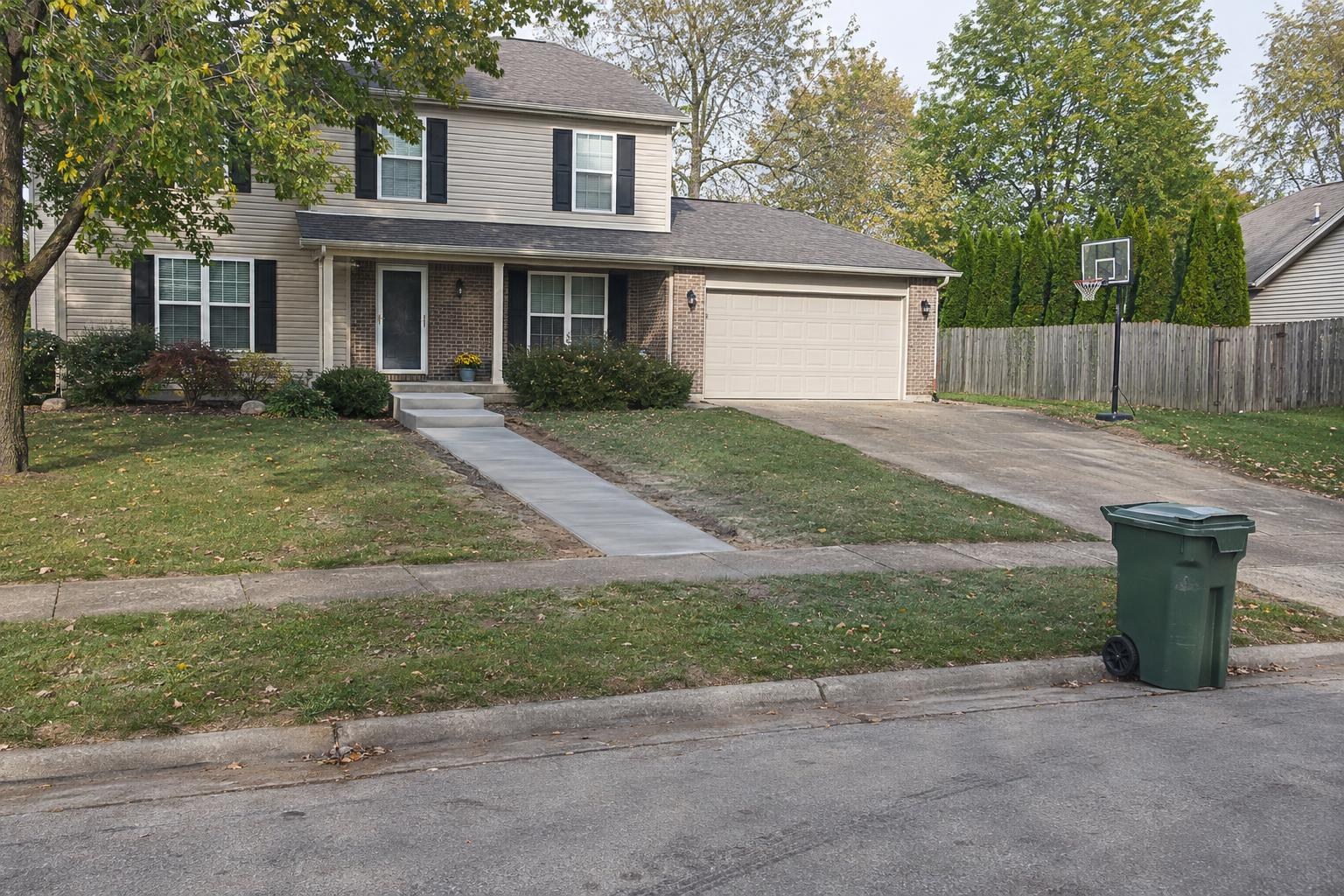
Steps have to meet a consistent rise and run or somebody trips on the third one. We form and pour walkways with a broom finish and expansion joints where they meet the driveway or porch slab, so movement there doesn't crack your steps.
Garage floors see road salt and antifreeze drips all winter, so we spec a higher-strength mix with air entrainment instead of a standard driveway blend. Fiber mesh goes in every pour to fight shrinkage cracking as it cures. We can also grind and seal an existing floor if the slab itself is sound and just looks bad.
City sidewalks and curb work have to meet South Bend's right-of-way specs for thickness and slope. We handle the forming, the pour, and the finish, and we'll coordinate the inspection if the job needs one.
A pole barn slab depends on its footings or piers being figured out before we ever set a form, depending on what the building will carry. We pour to the dimensions your building plans call for and leave anchor bolt or bracket layout to match the structure going on top.
We wash back the top layer of cream to expose the stone in the mix, which gives you a non-slip, textured surface that hides wear better than plain gray concrete. It costs a bit more than a broom finish but holds up well on pool decks and entryways.
Footings have to sit below the frost line, which around South Bend means roughly 36 to 42 inches down. We pour footings for additions, decks, and garages, and we size the steel and the footing width to whatever load is going on top of it.
Four steps, and no surprises in any of them.
You tell us what you want doing, we look at what is actually there, and we ask the awkward questions early.
In writing, itemised, free. If something might add cost later we flag it now rather than at the end.
Same crew throughout. We cover your floors, keep the dust down and tidy up before we leave each day.
You point out anything you are not happy with and we fix it before the invoice, not after.
This is the ground we cover for driveway, patio, and slab work.
Questions that tend to come up once a project's underway.
Describe the problem and we will tell you what it probably is. No obligation.